5 Sensory-Friendly Places to Visit in South Bend, IN 

For some kids with autism or developmental differences, busy places can sometimes feel overwhelming. 

Sensory-friendly spaces are designed to make outings easier when that happens. They may lower noise or lighting, provide extra room to move, or offer simple tools to help families feel more comfortable. 

In South Bend, families will find several places that take these needs into account. Here are five sensory-friendly spots to visit. 

1. Explore Animals at the Potawatomi Zoo 

The Potawatomi Zoo is Indiana’s oldest zoo and home to more than 400 animals. The zoo offers Sensory Friendly Days with quieter pathways, lower sound levels, and sensory bags available for checkout. Families can also enjoy the wide outdoor layout, which helps children explore at their own pace. 

Tip for Families: Check the events calendar for sensory-friendly days, or visit on weekday mornings for a calmer atmosphere. 

2. Find a Quiet Corner at St. Joe County Public Library 

The St. Joe County Public Library provides a peaceful environment with cozy reading areas, interactive children’s spaces, and special sensory kits that include tools like fidget toys and noise-canceling headphones. The library also offers inclusive story times and programs throughout the year. 

Tip for Families: Ask the staff about available sensory kits or upcoming sensory-friendly events. 

3. Walk the Trails at Rum Village Park 

Rum Village Park covers more than 160 acres of trails, wooded areas, and picnic spots. Families can enjoy nature walks, bird watching, or quiet play in open green spaces. The slower pace of the park makes it an excellent choice for children who feel more comfortable outdoors. 

Tip for Families: Visit in the morning or late afternoon for cooler temperatures and fewer crowds. 

4. Enjoy Inclusive Fun at the 4-H Fairgrounds 

Each summer, the St. Joseph County 4-H Fair hosts a Sensory Friendly Day with reduced lights, lower sound levels, and fewer crowds. It’s a chance for children to experience the fun of the fair in a setting designed with their needs in mind. 

Tip for Families: Check the fair’s schedule. Sensory-friendly hours are typically held in the morning. 

5. Play and Relax at Howard Park 

Howard Park is a family favorite in South Bend. The park has wide-open play areas, walking trails, and plenty of space to explore. In winter, staff adjust the ice trail and playground for sensory-sensitive families. 

Tip for Families: Bring a picnic and enjoy the large green space. Early mornings or weekdays are the most peaceful times to visit. 

Check out our LEARN Behavioral blog on 5 simple play ideas for more sensory-friendly inspiration. 

Looking for additional support for your child in South Bend, IN? At the Behavior Analysis Center for Autism (BACA), part of LEARN Behavioral, we use science and data to deliver contemporary applied behavior analysis (ABA) therapy, tailored to your child’s unique needs, interests, and personality. Learn more about our services in the South Bend area and contact us today. 

6 Fall School Success Tips for Kids on the Autism Spectrum 

New classrooms. New routines. New sounds. The start of school brings big changes, especially for kids on the autism spectrum.  

Predictability, preparation, and strong communication between home and school can help make the transition smoother. Use these tips to support your child during the first months of school and throughout the fall.  

1. Keep routines steady 

Children often do best when their days are predictable. Set a consistent wake-up time. It’s best to start this a week or two before school starts, and try not to deviate too much on weekends. Also set a breakfast routine and after-school schedule. Use a visual checklist so your child can follow each step. Small changes, like keeping the same breakfast spot or packing the backpack the night before, can make mornings calmer. 
Why it works: Predictable routines help reduce anxiety, build independence, and make transitions smoother. 

2. Plan for sensory comfort 

Schools can be loud, bright, and busy. Think about what helps your child feel calm and focused. You might pack noise-reducing headphones, a favorite fidget, or sunglasses for bright hallways. Talk with the teacher about when and how your child can use these tools. 
Why it works: Supporting sensory needs helps your child stay engaged and comfortable throughout the day. 

3. Stay connected with the teacher 

Choose a simple way to share updates, like a daily note, short emails, or a communication app. If your child has an individualized education program (IEP), review it together early in the year. Make sure supports are in place not only in the classroom but also during lunch, recess, and specials like art or gym. 
Why it works: Strong home-school communication helps address challenges quickly and celebrate progress. 

4. Practice school skills at home 

A little rehearsal can make school tasks less overwhelming. Practice opening lunch containers, lining up, or asking for help. Role-play transitions, such as moving from recess back to the classroom, so your child knows what to expect. 
Why it works: Familiarity with daily tasks builds confidence and reduces stress in new situations. 

5. Discover your child’s interests  

If your child loves animals, superheroes, or trains, look for ways to bring those interests into schoolwork. Share ideas with the teacher, who may be able to use them to spark engagement during lessons. 
Why it works: Connecting learning to favorite topics makes participation more enjoyable and motivating. 

6. Build in after-school downtime 

The school day can be demanding, so give your child a set time to unwind after getting home. This could mean quiet play, outdoor movement, or calming sensory activities. Hold off on homework until your child feels settled. 
Why it works: Time to recharge helps your child recover from the day and prepares them for the evening. 

Starting strong this fall 

The first months of school set the tone for the year. With steady routines, sensory supports, and strong connections with teachers, your child can feel secure, capable, and ready to learn. 

At LEARN Behavioral, we partner with families to help children on the autism spectrum succeed at school and beyond. Our team can work with you to build skills, strengthen communication, and support learning both at home and in the classroom. 

Connect with our team today to find services in your area and learn how we can help your child thrive this school year. 

Q&A About ABA Therapy for Children with Autism: FAQ for Caregivers

Was your child recently diagnosed with autism? Are you beginning to navigate treatment for your child? Before you get started, check out these seven FAQs about ABA therapy.

What is the goal of ABA therapy?

ABA therapy is designed to support autistic individuals and their families, achieve their identified goals, and improve their quality of life. ABA-based interventions are supported by decades of research and enhance social, communication, play, and adaptive skills. Services incorporate the needs and interests of the autistic individual and their caregiver(s). A behavior analyst delivers the ABA services with the help of behavior technicians, who often provide direct care to the autistic individual. Services are tailored to the individual’s unique needs, with their feedback, and evolve over time. Services for children may look quite different than services for adults, given the individuals’ needs differ over time.

What is “contemporary ABA therapy”?

At LEARN, we refer to our approach as “contemporary ABA.” It is an evolved approach to ABA therapy that promotes individualized treatment, naturalistic and play-based teaching, and is person-centered. LEARN provides a contemporary approach that acknowledges the evolution of ABA, values the individual and their family, and creates space for individuality. Practicing contemporary ABA means that our behavior analysts deeply understand their responsibility to positively and meaningfully impact the lives of the individuals served.

How many hours of ABA therapy will my child receive?

Your child’s hours will be determined between you and your behavior analyst. Your behavior analyst recommends hours based on assessing your child’s needs, other therapies received, and your feedback as the parent/caregiver. Focused programs range from 10-25 hours per week, and comprehensive programs range from 30-40 hours weekly. At LEARN, we provide home-based, center-based, and community-based services, and you can reach out to your local clinical director to find out which services are available in your area.

Are your ABA therapy services individualized?

Absolutely! Each autistic person we serve is unique, and we believe that should be celebrated. Our goal is to promote individual interests and incorporate those into ABA therapy. Behavior analysts make individualized recommendations for services, including hours based on the child and customized goals that fit their needs. Behavior therapists receive training on how to understand the preferences of their clients and include those in sessions to make them fun, rewarding, and engaging.

How is neurodiversity integrated into your approach to ABA therapy?

Listening to the perspective of autistic folks has informed our approach to ABA therapy and led us to incorporate neurodiversity into our practice. Our goal is to elevate the autistic voices in our community, including the individuals we serve, our neurodivergent employees, and the greater neurodivergent community. We’re deeply committed to person-centered ABA therapy practices and promote assent-based care, meaning we validate the identities and experiences of neurodivergent folks and create space for autistic voices to be heard and upheld.

Will my child be required to do discrete trials and sit at a table?

Not all autistic folks benefi t from discrete trials or tabletop work. For example, a two-year-old child with lots of energy may benefit more from a play-based approach with the therapist sitting on the floor and embedding learning opportunities in play with their favorite toy. Behavior analysts overseeing the treatment plan take time to assess the individual’s needs and work collaboratively with the family to identify an approach to treatment that will work best for the child.

What if someone doesn’t want ABA therapy?

We understand that not everyone seeks ABA therapy, feels it’s the best fit, or perhaps, thinks it’s the right time to try. As with other medical services, the patient (along with their caregiver, if a child) has the right to decide when, if, and what treatment is right for them. Not all ABA therapy providers have the same approach, either, and LEARN supports a family’s right to choose a provider that meets their needs and is a good match for their treatment goals. We want families and our clients to be excited about services and encourage collaboration on our journey together.

How to Help Your Child Through a Meltdown

There is no “one-plan-fits-all” approach for handling meltdowns. When children with autism hit sensory overload, their reactions can be intense, and knowing how to respond thoughtfully in the heat of the moment can be challenging.

Unfortunately, there is no magic wand to make meltdowns go away. But there are tactics and strategies to help tame a meltdown when your child feels overwhelmed. The key is to stay calm and work your way through it.

Assessing the Situation, Identifying the Triggers 

One thing that can help is to understand the reason for the meltdown, while recognizing that reasons can vary greatly from child to child. For instance, your child may not want to do certain tasks. They may be nervous about school. They may get embarrassed about underperforming, when compared to peers. Or they may struggle with separation from mom or dad.

Some kids have meltdowns because of environmental factors like room temperature, new students, or how the desks are set up in the classroom. Even small changes in the environment can lead to lead to intense feelings— rearranging furniture, for instance. Take note of the time and place of the meltdown and factors that might be overwhelming. Once you identify the trigger, you can see if there is a way to avoid it.

If your child can have conversations, try to discuss and get to the root of the problem. This can also help you identify patterns of behaviors to address. If your child is unable to have a conversation or communicate verbally, pay attention to other communication cues to try to better understand the problem.

Knowing the cause of the behavior isn’t mandatory, but it is helpful in knowing how to address it. In some cases, you can eliminate the trigger. Other times, you just have to wait it out and give your child space to rest and recover.


Home-Based Strategies

One way to make your expectations clear is to create a token/reward system at home. For example, you can create a chart on which you and your child come up with and list desired behaviors. Use pictures instead of words if it helps your child understand your expectations. Talk out loud about your goals and the rewards your child can expect for meeting those goals. Remember: the rewards don’t always have to be tangible items like a pack of gummies or a cup of hot chocolate. Rewards can also be experiential, such as playing a special game before bed, reading a favorite book, or baking a tasty treat together.

As you work with your child to create your list or chart of behavior goals, consider these possibilities:

  • Turn-taking: Here, you can explain that you and your child are going to sit down and play with toys. After a minute, ask your child for a turn with their toy. If your child gives you a turn, they can earn a token/reward.
  • Sportsmanship: Play a game with your child. Ask them if they want you to let them win the first game. During the second game, let them know you’re going to try to win. Tell them that if you win, and they tell you “good game,” while keeping a happy face, they will earn a token/reward.
  • Doing work: Let your child know that in two minutes, you’re going to ask them to pick up their crayons. If they pick them up quickly, they can earn a token/reward. Start with easy goals. Over time, you can provide less warning and make these more natural, everyday interactions.

Understanding What Happens at School

Targeting meltdowns at school can be more difficult since you aren’t there. If your school has a reporting system to give you a sense of your child’s behavior each day, that can help you measure progress.

For example, some schools use a color scale: green equals good behavior; yellow is slightly disruptive; and red is a meltdown. If your school does not have a behavior reporting system and you think your child could use one, talk to your child’s teacher.

You could include behavior reports from the school in your token/reward system at home—or even set up a separate system based on these reports. For example, a green mark at school could equal an hour of TV time or three tokens, while a yellow mark could equal 30 minutes of TV or two tokens, and a red mark could equal 15 minutes of TV or one token.

You’re probably wondering, “Why reward a red score?” The reason is to reward your child for the positive behavior—bringing home the report—and to avoid taking away everything. For instance, if they think they will lose every privilege, this can increase the chance of a meltdown at school. Remember that you’re creating a reward system, not a punishment system. Focus on reinforcing positive behaviors, without being too harsh when there is a meltdown.

Also realize that reports you receive from school —or from your child or from your own observations, for that matter—are not a complete representation of the situation. Typically, a number of factors contribute to the situation, and behaviors that happen at school (or anywhere else, such as at the doctor or on the playground) can change according to the environment. Be careful not to make assumptions about solutions that may not work in every environment.

Stick to Your Rules, Celebrate Small Victories

Once you set the rules, stick to them. Avoid bartering. This system holds your child accountable and can begin with goals that are easy to reach. Accept that kids will make mistakes and that all kids engage in meltdowns from time to time. Remember to stay calm and keep your cool—these are key to addressing your child’s behavior successfully.

Start with small goals and set realistic expectations —the first one being: your child’s meltdowns will not stop at once. This is a process that will happen slowly over time. Track your progress, and celebrate the little victories when your child reaches behavior goals.

5 Tips for Planning a Successful Vacation for Your Child with Autism

Embarking on a family vacation is a time for creating cherished memories and bonding with your loved ones. For families with a child with autism, finding the perfect destination that caters to everyone’s needs might seem like a daunting task. These resources can
make planning easier.

More vacation destinations than ever are prioritizing inclusivity and accessibility. From autism-friendly theme parks to sensory support on cruises, there are countless options for creating an unforgettable experience.

Here, we break it down and look at five vacation options that celebrate your child’s individuality while providing fun and relaxation for the whole family.

1. Autism-Friendly Travel by Plane

Wings for Autism is a program that helps families with children on the autism spectrum become more familiar with air travel. They offer airport “dress rehearsals” so children can experience the entire process, from checking in to boarding the plane, without actually taking off. This helps them become more comfortable with the idea of flying.

The program started in Massachusetts and has been adopted by more than 70 airports nationwide. JetBlue, Delta, American, and United are among the airlines that routinely participate in programs that support passengers with autism. Some airlines, like Delta, even have multi-sensory rooms in some airports – rooms with calming colors, sounds, and a small aircraft mock-up to let passengers get familiar with air travel.

2. Autism-Friendly Travel by Car

The car brand Chrysler recently partnered with the Autism Society of America to support the needs of travelers with autism. Chrysler now offers a sensory package option for the Chrysler Pacifica. This package includes noise-cancelling headphones, fidget toys, and a weighted blanket to help create a comfortable and calming environment for children with autism during car rides.

No matter what kind of car you have, you can create your own DIY sensory station with similar options. Other things to keep in mind when planning a road trip are to:

  • Plan frequent breaks to allow your child to stretch and decompress.
  • Create a visual schedule to help your child understand the trip’s timeline.
  • Pack familiar items and sensory tools to help soothe your child during the journey.

3. Autism-Friendly Travel by Cruise Ship

Some cruise lines have begun offering sensory support for passengers with autism, including:

  • Autism on the Seas: This international charity provides tailored cruises for autism families. Their teams manage these cruises, which take place across multiple cruise lines.
  • Carnival Cruise Line: Carnival offers a variety of “sensory inclusive” activities, including modified youth programs and designated quiet spaces for relaxation.
  • Celebrity Cruises: This cruise line offers accessible cruises and interactive initiatives for families. They train their youth staff in autism awareness. They also cover various developmental disabilities and offer priority check-in, boarding, and departure.
  • Disney Cruise Line: Disney offers a number of services for guests with autism, such as priority check-in online and options for children who have trouble waiting in lines or crowds.
  • Norwegian Cruise Line: They have a team of “accessibility coordinators” who support travelers with special needs. They work closely with families with autism, addressing their concerns individually.
  • Royal Caribbean: Their “Autism Friendly Ships” program includes sensory-friendly films, toys, and modified youth activities to accommodate children with autism.

4. Autism-Friendly Theme Parks

Many popular theme parks have made efforts to accommodate guests with autism:

  • Disney: Disney offers a Disability Access Service (DAS) pass that allows guests with autism to schedule return times for attractions, reducing wait times and providing a more predictable experience.
  • Legoland: Legoland provides a Hero Pass for autistic guests, granting them the opportunity to bypass lines and access quiet rooms when needed.
  • Sea World: Sea World offers a Ride Accessibility Program (RAP) that helps guests with autism plan their visit and enjoy attractions at their own pace.
  • Six Flags: Six Flags has an Attraction Access Pass for autistic guests, allowing them to avoid long lines and access designated quiet areas.
  • Sesame Place: Sesame Place is the first theme park to be designated as a Certified Autism Center (CAC) and offers sensory guides, quiet rooms, and noise-cancelling headphones for guests with autism.

5. A Staycation for You and Your Autistic Child

If you prefer to stay close to home, there are plenty of ways to create a memorable and enjoyable staycation for your family:

  • Set up a backyard camping experience with tents, a fire pit, and s’mores.
  • Visit local attractions, such as museums, parks,
    and zoos, that offer sensory-friendly hours or events.
  • Create a themed week with daily activities based on your child’s interests – such as art, science,
    or nature exploration.

Planning an Autism-Friendly Vacation Can Be Simple

Autism-friendly destinations can make planning a family vacation less daunting and more exciting for all.

Focus on your child’s needs and explore autism-friendly places. Choose the best locations and accommodations for your family and your budget. A little thoughtful preparation can pave the way for a memorable and enjoyable trip for everyone involved.

Autism and Picky Eating: Help Your Child Build Healthy Eating Habits

Does your child only eat one brand of chicken nuggets or refuse anything other than a single fl avor of yogurt? Do you pack the same lunch for your child, day after day after oh-so-tiring and monotonous day?

Whether your child attends school or daycare or stays home during the day, it’s important to keep tabs on their eating habits to see what you can do to make mealtime a success. While picky eating is a common problem among all kids, the issue can especially challenge children on the autism spectrum. Here, I share a few strategies that can help. Keep in mind, though, that if your child’s picking eating interferes with their ability to take in enough calories or nutrients, you should reach out to your pediatrician right away.

Set a Goal

As a family, pinpoint what your goal is when addressing picky eating. What’s something specific you want to address?

Do you want your child to waste less? Do you want them to try new foods? Do you want to try more meals and recipes that all family members can enjoy together? Identify and set a specific goal. That way, you can figure out what strategies and steps you need to take to achieve it.

Think About Solutions

Take time to plan and think critically about the goal. For example, if you want to cut down on your child’s snacking, take a step back to consider what it is about snacking that concerns you. Is it that they won’t eat dinner? Or they fill up on foods that lack nutrition? In either case, consider what’s available as a snack. Is there a food you typically offer at dinner that you could offer as a snack? That way, if your child does “fill up” on the snack, that’s OK.

When evaluating your concerns regarding the behavior, be sure to look at a span of time, instead of just one meal or even one day. Give yourself enough time to establish a broader sense of their caloric intake and nutritional needs.

Consider Your Environment

When we think of picky eating, we often focus on the moments in which food is in front of the child. But many factors that influence behavior actually start before this.

Preparation and activity before a meal have a huge impact on the likelihood of eating, including the quantity and variety of food your child eats. Think carefully about the environment you’ve set up for meals and snacks at home. Variables include where your child sits, how you present the food, how much food you present, and more.

Limit Distractions

Regarding the physical setup, have your child sit at a table where they can focus on eating as the primary activity. Are there distractions?

While allowing screen time during snacks and meals may help your child stay seated, screen time can also detract from their attention to eating and to their own internal cues. These cues are important for your child to notice as they explore new foods and how much food to eat.

Aim to minimize distractions. Doing so will help you notice what scenarios lead to more success at mealtime.

Give Your Child Choices

Are you planning to have your child participate in preparing the food or choosing an aspect of the meal? Allowing your child to participate in the preparation and decision-making that go into the snack or meal can help increase motivation to eat the meal.

Perhaps your child can get out ingredients for the meal or hold the bowl while you stir. Allow your child to make small decisions along the way that build buy-in, without compromising the boundaries that you’ve identified for the meal.

For example, you may have decided that the meal will include some fruit at dinner (a food type that is often involved in picky eating). Allow your child some choice in getting to this outcome by letting them know, “We’re going to have chicken drumsticks with a small bit of fruit. Do you want blueberries or watermelon as the fruit?”

This provides boundaries, while still giving your child an opportunity to choose. It’s likely that having chosen blueberries, for example, will lead to a greater likelihood of eating them.

Let Them Serve Themselves

Another way of promoting choice and control is by allowing your child to serve themselves. Your child may not be ready to prepare the meal from start to finish, but they may be able to sprinkle toppings or help squirt dipping sauce on to their plate.

By allowing your child to make small choices throughout the preparation of the meal, you’re deciding what is served (such as tacos), with room for your child’s opinion and preferences to be considered.

Identify Sensory Issues

Some aspects of preparing and presenting food can tell us more about food selectivity and picky eating, and can provide us with more information for the future. In fact, you may discover that your child outright refuses certain foods or entire food categories.

Take a closer look at which foods are left on the plate or pushed away. Try to identify certain sensory and texture properties of foods that are often refused, such as squishy or tough foods.

As adults, we often forget that certain foods, particularly produce, don’t actually taste the same each time we eat them. A tomato purchased at peak ripeness in-season may taste very different from a similar-looking tomato past its prime off-season. For children, this may lead to refusal, often without a corresponding explanation as to why the food was refused. In the future, this could lead to even more refusal.

Of course, there’s not much we can do to minimize variability in produce, but this knowledge can help us understand some of the shifts in preference. And, just as our own food preferences change over time, so do our children’s. We may never know why hot dogs moved from the favorite list to the repulsive list. But a strategic approach to food goals that involves stopping and observing over a period of time, while limiting distractions and making choice part of your child’s eating routine, can make a real difference—and over time, help make family meals more enjoyable for everyone.

Looking for more tips on raising kids with autism? Dr. Temple Grandin shares some of what worked for her as a child in her latest conversation with us on All Autism Talk. Listen to the podcast.

Why Play is Essential to ABA Therapy for Autistic Children

Play is an essential part of working with children with autism in ABA.

As a behavior technician (BT), play helps build trust and comfort between you and your client. That process starts with play, having fun, and being a kid. Getting your clients in a state of play builds this foundation for trust, which we refer to as “rapport.” When starting to work with a new client, your supervisor and/or client’s caregiver will provide you with some of your client’s special interests and activities. You can incorporate these into your sessions to make learning fun and personalized. Using rapport in combination with their preferred activities leads to successful pairing with your client.

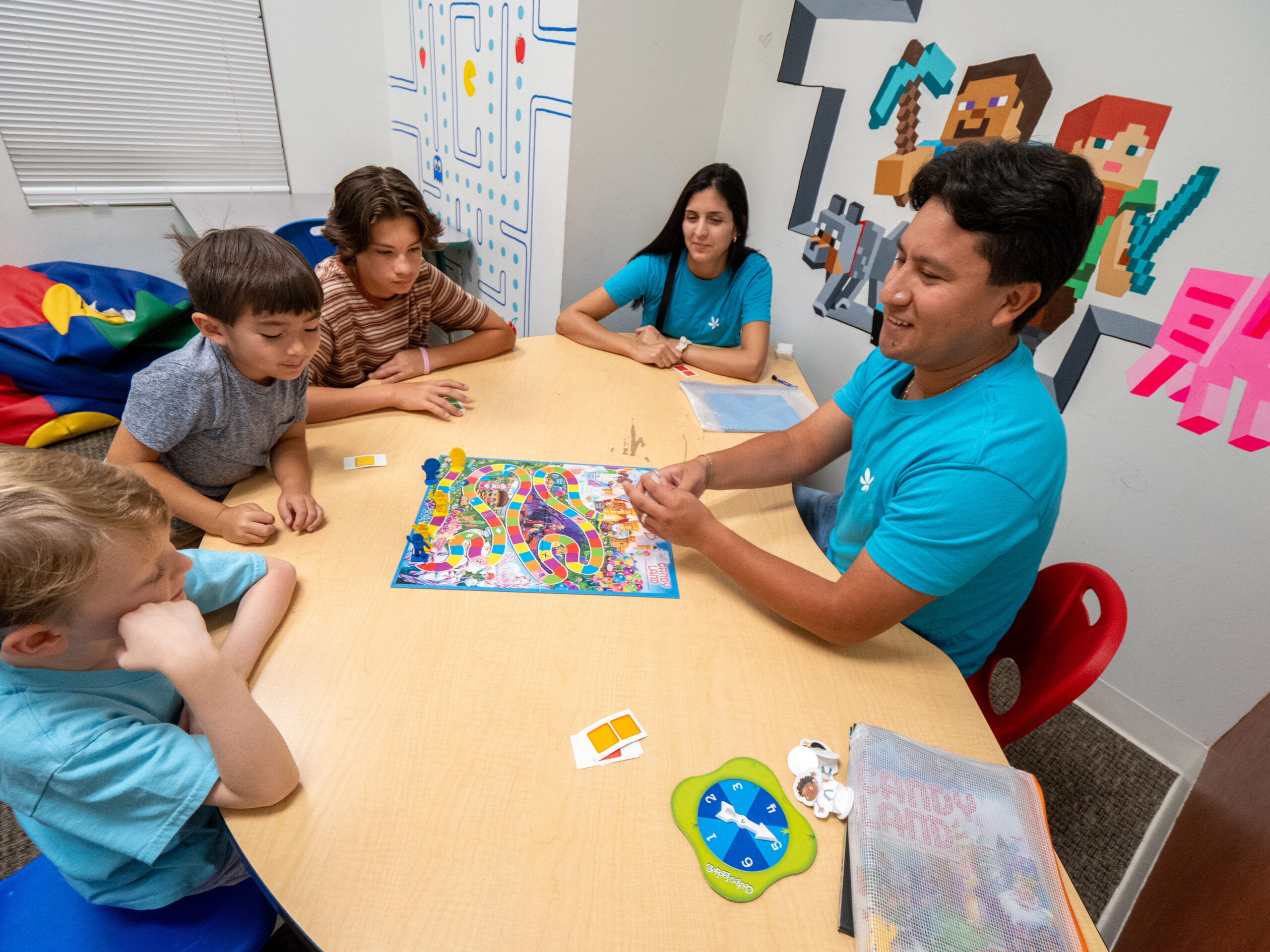
In a Learning Center setting, for example, your supervisor may suggest activities such as playing with toys or board games or interacting with peers. Your client may quickly find interest in a Learning Center toy, game, or other activity without prompting. But, if your client doesn’t give you a direct response, give them choices based on what you know about them. For example, say “We can play with train tracks or do a puzzle. What would you like to do?” Give them different choices until they choose something.

As soon as they give you an answer or show signs of interest in something, reinforce the toy or activity by showing interest in it yourself, e.g., clapping or showing praise. In my experience, this part of the pairing process varies. Sometimes it may take a while for a client to warm up in a social environment. Other times, it happens quickly. It just depends on the individual. As a BT, this process teaches you to be patient. When you find out what interests your clients, it makes pairing with them in sessions more fun.

Natural Environment Teaching (NET) While Pairing

Playing and pairing as a BT is essential because it creates opportunities for natural environment teaching (NET). Playing with your clients encourages an environment in which they’re motivated to participate.

In my first week working with a client, we played Memory*, a matching game. This was the first time we actively played together, and I saw him deeply engaged in an activity. I learned that he has a great memory, making the game more engaging for both of us. He became more receptive to responding once his attention was directed toward the game. Playing the game created opportunities to reinforce his behavior like waiting his turn, following the rules, and using his words when he had questions. This was essential to pairing early on in our tech-to-client relationship.

Playing Memory aided me in building rapport with my client. It built trust and comfort that’s pertinent to his learning environment. I could tell he was having a good time and vice versa. This environment motivated my client to learn. He enjoyed engaging in the fun activity with me and a group of peers. Participating in group games encourages patience, following instructions, and communication between clients.

Let Play Be Your Guide

Gaining your client’s trust before you place any demands is key. They are less likely to listen to you if they don’t know who you are. That’s why it’s important to take the time to play and pair with your client and show them that you’re safe and fun to be around.

Learning to play with your clients teaches you their interests. It shows you their likes and dislikes. It also points you to different games or activities in the Learning Center or teaching environment that may trigger them. Knowing their interests allows you to identify their reinforcers and see behavior patterns that their board certified behavior analyst (BCBA) can implement into future programming.

Time Flies When You’re Having Fun

Playing can be a lot of fun for BTs. There are several Learning Center games and activities that I enjoy implementing during sessions. I do my best to engage clients in activities that we mutually like. Once we find something we both enjoy, it doesn’t feel like work.

It’s rewarding to see clients make progress on their goals. Seeing them motivated to work for their preferred activities is also reassuring. This sense of accomplishment reinforces your work as a BT and motivates a continued state of play of learning and developing communication skills.

Incorporating play into your sessions fosters meaningful connections and creates a fun and engaging environment. It builds the foundation of trust between the client and their BT. We get to play an important role in each client’s learning and development. We can help nurture each child’s unique potential through dedication – one game at a time.

Additional Resources:

*Other games for pairing with a client can be found in the Play and Learning Addendum, 2.

The Silent Battle: Caregiver Mental Health in the Realm of Autism

In the quiet corners of countless homes, a silent battle is being waged every single day. It’s not fought with weapons or on a battlefield. It’s fought within the hearts and minds of caregivers for those with profound autism and intellectual and developmental disabilities (ID/DD).

The mental health challenges these caregivers face are often overlooked. However, some studies say they’re as intense and real as those that war veterans or caregivers for terminally ill children face.

The Unexpected Battlefield

Post-traumatic stress disorder (PTSD) symptoms are increasingly common for mothers of children with autism. Some researchers have compared the stress profiles to those of combat veterans.

That might seem shocking until you consider the constant stress these mothers face daily.

Unpredictable behaviors, communication barriers, and overwhelming needs are associated with profound autism. They can trigger a constant state of high alert.

Some compare those maternal cortisol levels to hypervigilance of a soldier on the battlefield. It’s a feeling of always on guard, always ready for the unexpected. Over time, this sustained state of stress can lead to PTSD. It manifests as intrusive thoughts or emotional numbness. Some people feel the need to avoid situations that remind them of traumatic experiences.

Stress Can Be Debilitating

Parents and caregivers of children with profound autism and ID/DD also share another similarity. Their mental health profiles can reflect higher levels of strain than those with parents of children with other disabilities. These caregivers experience chronic sorrow, anxiety, depression, and stress. It can be debilitating.

Some studies link these overwhelming feelings to caring for a child with a terminal illness. This comparison isn’t meant to equate autism with terminal illness. Instead, it highlights the significant emotional burden some caregivers carry. They grieve for the typical life their child might have had. They worry incessantly about their child’s future. They grapple with feelings of helplessness and exhaustion.

Understanding the Differences

It’s important to note that there are differences between DD (developmental disabilities), IDD (intellectual and developmental disabilities), and autism. While autism can be classified as a DD or an IDD, not all DD/IDD diagnoses are autism. Autism is characterized by social interaction difficulties, communication challenges, and a tendency to engage in repetitive behaviors. However, the severity of these symptoms can vary greatly from one person to another. Autism exists on a spectrum, and it’s different for every child.

Recognizing Caregiver Burnout

The first step to providing better support is recognizing the burnout caregivers can face. Mental health professionals, friends, and family are starting to acknowledge the emotional war some caregivers fight.

Some caregivers find support through resources like respite care, peer support groups, and counseling. Some providers offer stress management strategies, and researchers are trying to better understand caregiver PTSD to come up with more effective interventions.

Recognizing burnout and offering resources and relief are part of supporting the autism community. The silent battle these caregivers face doesn’t have to be one they face alone. The road ahead may be long, but with increased awareness and support, together, we can make it a little less daunting for those who tread it every day.

8 Tips for Planning for a Successful Holiday for Your Child with Autism

The holidays are an exciting time as we share traditions, spend time with family, and navigate the different gatherings and celebrations. Holiday spirit can also bring holiday stress. We want to help you and your family have the most successful (and least stressful) season by offering our best practices and tips.

BEFORE THE HOLIDAYS

Start with Expectations

Having a positive and realistic mindset about what you want to create can make a big difference. What could go right this season? Keep an optimistic view of the possibilities for special moments you want to share. A winning holiday doesn’t have to mean extravagant plans. Consider what would be ideal, be prepared to accept when flexibility is needed, and look for the wins along the way.

Consider Comfort and Safety Needs

When visiting events or other homes, bring items you know will bring comfort for your child—things like earplugs (or headphones), fidgets, and soft clothes. When traveling, ask for needed accommodations from your airline and hotel. Make sure you are aware of possible water nearby and review crisis plans with loved ones.

Practice Before Events

Now is a great time to discuss upcoming changes to schedules and routines. Involve your child in the process whenever possible. Playing memory games with photos of those you will see this holiday season allows your child to identify matching names and faces. Establish a phrase or code word with your child to practice using when they need to take a break from events to calm down and relax.

DURING THE HOLIDAYS

Maintain Routines

During the holidays, change is inevitable but find ways to create or maintain routines for your child. What are things you can build into every day? Perhaps it’s something you do together each morning, afternoon, and evening (regardless of location). Utilizing visual supports like calendars and independent activity schedules can be helpful too.

Build in Fun!

Whether days are filled with errands or time at home, consider letting your child choose a couple of activities each morning for the day ahead. Here are some suggestions that might work for your family:

  • Bake something together
  • Do holiday arts and crafts
  • Take a drive to see holiday lights in your neighborhood, zoo, or garden
  • Help with decorations or gift wrapping
  • Sing along with holiday music

Consider Sensory Needs

Holiday meals can be tricky for some. Plan ahead for alternative foods that you know your child will eat. As we mentioned earlier, being mindful of dressing in (or packing extra) comfortable clothing can be helpful. Preferred items, such as toys or other objects that help promote calm for your child, are a good idea too. Consider making a sensory box that includes things to stimulate your child’s touch/sight/sound/taste/smell. Finally, establish a quiet “break space” that your child can utilize when needed.

WRAPPING UP THE HOLIDAYS

Plan for Rest and Recovery

After each scheduled big event or outing, try to allow time for a quiet evening that follows. Start a list or document on your computer of things that went well that you want to repeat and ideas about what would make it easier next time.

Transition Back to School

Packing holiday decorations and unpacking clothes can be helpful signals to your child that things are moving back to the normal routine. Other visual cues like a countdown calendar for back to school can help prepare them. Show them when school starts and have them mark off the days. Leave extra time the first morning back to school so you can have a nice breakfast and move with ease into the day. If possible, organize a nice, calm activity after school and focus on what went well at the end of the day.

How to Make Halloween a Treat for Kids with Autism Spectrum Disorder (ASD)

There’s a lot about Halloween that can be tricky for kids on the autism spectrum.

The holiday is full of everything out of the ordinary: costumes, candy, and a certain amount of chaos. Routines get replaced with class parties, strange sights and sounds, and droves of costumed-kids roaming around trick-or-treating after dark.

The University of Alabama at Birmingham School of Medicine says recent studies indicate that five percent of children are affected by a sensory processing disorder. For kids with autism, as many as 80 to 100 percent experience sensory processing challenges, according to an article from JAMA Pediatrics. Challenges include being over-responsive or under-responsive to sensory input like bright lights, loud noises, or tight clothing. With the many opportunities for sensory overload that come with Halloween, the holiday can present a particular challenge for kids on the autism spectrum.

Experts say their biggest tip for making Halloween a success for kids with ASD is to prepare with some planning so your child is not caught off-guard. Here, we share six steps to help you plan.

Prepare Your Child with Autism for Halloween by Talking About It

In the days or weeks leading up to Halloween, give your child some time to adapt to the concept. Read books and show pictures, movies, or cartoons that give them visual cues of what to expect. Start talking about people dressing up, decorations you see in your neighborhood, and what happens when kids go trick-or-treating.

Talking about these traditions can take some of the “scary” out of Halloween. It can be confusing when you’re suddenly hearing creepy music and allowing your child to take candy from strangers. A little prep can go a long way in easing their fears.

Ensure Your Child’s Halloween Costume Works for Them

If your child is going to wear a costume, have them try it on well in advance to get used to the feel of it. Let them play in it for short intervals, and avoid costumes that are uncomfortable or get in the way of their mobility, breathing, or vision.

If clothing texture is an issue, consider something simple like a decorated hoodie, character pajamas, or an accessory they could wear over regular clothes, like a cape. Also do some sleuthing online by searching for “Halloween costumes for kids with autism” or “sensory friendly Halloween costume ideas.”

Help Prepare Your Child for Trick-or-Treating Through Role Play

Role play what it would be like to go trick-or-treating. You can even see if neighbors will let you ring their doorbell to practice the “trick-or-treat” skill a few days before Halloween. Talk about safety rules for crossing the street, and set boundaries on taking only one treat and not more than what’s offered. Bring a flashlight, and consider taking noise-cancelling headphones, in case your child needs them.

A trial run might also give you a sense of whether your child is comfortable dressing up and trick-or-treating. If they’re not up for it, consider whether an activity, such as decorating pumpkins or cookies at home, would be less overwhelming. After all, trick-or-treating is only one part of Halloween. Don’t feel the least bit guilty about opting out.

If you do opt to stay home, consider letting your child practice handing out candy at your own front door. Practice with a real piece of candy or healthy snack, and consider offering your child a piece as a treat.

Respect Your Child’s Limits for an Enjoyable Halloween Experience

You don’t have to walk the whole neighborhood to enjoy a Halloween outing. Try starting early, before it gets dark, and skipping houses with a lot of noise, crowds, or scary decorations.

Know your child’s limits—and your own limits. Maybe you need to go to just a few houses before you head home. Keeping your outing short may help your child avoid a meltdown—and may help you feel less stressed and overwhelmed.

Halloween Candy Limits and Creative Alternatives

Once you get home, turn off your porch light to signal Halloween trick-or-treating is over at your house.

Have a plan for your child’s candy stash and how much they’ll be allowed to eat. If sugar before bedtime is off-limits in your house, consider letting your child trade in the candy for a toy or coins for their piggy bank, or a chance to do something else enticing like playing a game, listening to a song, or watching a show.

Tailor Halloween Traditions to Fit Your Family’s Needs

The most important thing is to create a plan and a Halloween environment that fits your child’s comfort level, in addition to your own comfort level. Remember: your holiday traditions can be unique to your family.

There’s no holiday better than Halloween to show that special days come dressed in different ways, and everyone has a place. If you play to your child’s strengths and know your family’s limits, you can set yourself up for a successful day that really is a treat.

Learn more on our blog about routine changes and avoiding meltdowns.